Call for Book Chapters

Dear Academician/Professor,
We are pleased to invite original research chapter submissions for our forthcoming research book:
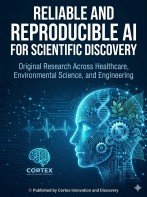
Reliable and Reproducible AI for Scientific Discovery
Publisher: Cortex Innovation and Discovery
Publication Charges: No Charges
Review Process: Peer-Reviewed
ISBN: Will Be Assigned
Scope: Interdisciplinary and International
Publisher Website: www.cortexpub.com
Chapter Template: Attached with email
About the Book
Artificial Intelligence (AI) is transforming scientific discovery by enabling researchers to analyze complex datasets, develop predictive models, automate experiments, and uncover previously unknown patterns. However, ensuring that AI-driven scientific findings are reliable, transparent, reproducible, interpretable, and ethically sound remains a major research challenge.
This book aims to bring together original research contributions that advance the development and application of reliable and reproducible AI methodologies across scientific disciplines. It will provide a platform for researchers to present innovative algorithms, validated frameworks, experimental findings, real-world applications, and methodological advances that strengthen the credibility and reproducibility of AI-assisted scientific research.
We welcome contributions from researchers working in computer science, artificial intelligence, healthcare, engineering, environmental science, agriculture, biotechnology, physical sciences, and other relevant interdisciplinary domains.
Scope of the Book
The book chapters will cover, but is not limited to, the following themes:
  1. Reliable and Trustworthy AI: Robustness, reliability assessment, uncertainty quantification, and validation of AI systems.
  2. Reproducible Machine Learning: Reproducible experiments, computational workflows, benchmarking, and experimental reporting.
  3. Explainable and Interpretable AI: Explainable AI (XAI), model transparency, interpretability, and scientific reasoning.
  4. Generative AI for Scientific Discovery: Large language models, generative models, AI-assisted hypothesis generation, and scientific knowledge discovery.
  5. Data Quality and Scientific Integrity: Dataset quality, data provenance, bias detection, data leakage, and research integrity.
  6. AI in Healthcare and Biomedical Research: Reliable clinical prediction, medical imaging, drug discovery, biomedical data analysis, and decision support.
  7. AI for Environmental and Climate Science: Environmental monitoring, climate modelling, biodiversity analysis, and sustainable resource management.
  8. AI in Engineering and Physical Sciences: Intelligent simulation, predictive modelling, materials discovery, and AI-assisted experimentation.
  9. AI in Agriculture and Life Sciences: Precision agriculture, crop modelling, biological data analysis, and sustainable food systems.
  10. Federated, Privacy-Preserving, and Secure AI: Privacy-aware learning, distributed scientific collaboration, and secure AI research.
  11. Responsible and Ethical AI: Fairness, accountability, governance, transparency, and responsible scientific applications.
  12. AI Agents and Automated Scientific Workflows: Autonomous experimentation, agentic AI, laboratory automation, and scientific workflow orchestration.
  13. Benchmarking and Evaluation of Scientific AI: Generalization, external validation, performance metrics, uncertainty analysis, and comparative evaluation.
  14. Open Science and AI Research Infrastructure: Open datasets, code availability, model documentation, version control, and reusable research resources.
Benefits of Publishing a Chapter
Contributing authors will benefit from the following opportunities:
  • Zero publication charges
  • Peer-reviewed publication
  • Rapid editorial processing
  • ISBN-assigned book
  • International research visibility
  • Interdisciplinary collaboration
  • Research dissemination
  • Potential journal publication opportunity
  • Indexing: The book will be indexed in Scopus/WoS, Google Scholar, PubMed, and other databases based on the contribution of chapters.
Submission Guidelines
Authors are requested to ensure that their submissions:
  • Present original work and make a clear contribution to the field.
  • Include appropriate methodology, experimental validation, and references.
  • Follow accepted standards of research ethics and academic integrity.
  • Clearly report relevant datasets, software, model configurations, and experimental procedures wherever applicable to support reproducibility.
  • Are not under consideration for publication elsewhere in the same form.
Invitation to Contribute
We warmly invite researchers, academicians, scientists, industry professionals, and research scholars to contribute to this important scholarly initiative. We also encourage colleagues to circulate this call among relevant research groups and academic networks.
Researchers interested in contributing are invited to submit their proposed chapter in detail with title, abstract, keywords, and author affiliations to the editorial team at Make Submission or send email at editor@cortexpub.com
Publisher website: www.cortexpub.com 
Extended Abstract Submission deadline: November 15, 2026
Full Chapter Submission deadline: November 30, 2026
Expected publication: January 15, 2026
Chapter submission format: Chapter Template
 
We look forward to receiving high-quality research contributions that advance reliable and reproducible AI for scientific discovery.